
Miramar is a tightly built South Florida city where planned neighborhoods, canal-side lots, and busy commercial areas create very different tree care needs. Large oak canopies over gated communities, aging palms along Miramar Parkway, and thick growth near retention ponds each bring their own access and health concerns. The network of tree care professionals in Fort Lauderdale knows how to handle root encroachment near drainage systems, remove storm-damaged limbs from confined residential lots, and protect mature trees on properties that need to stay safe and easy to access through South Florida's harsh seasonal weather.
That is a big reason more property owners in Miramar, FL, are turning to Arbor Tree Care for dependable year-round maintenance.

Prefer to Talk to An Expert?
(954) 947-6002
Why Miramar Property Owners Rely on Local Pros
Because they work in the area every day, these professionals understand the canal-adjacent soil, persistent humidity, and dense subdivision canopy that make Miramar different from nearby cities. Each job is completed with tools and methods chosen for local conditions, including root pressure near water-management infrastructure, wind stress on mature trees, and pest activity common in Broward County.
From expert tree pruning solutions along Monarch Lakes Boulevard to stump clearing near the retention areas off Red Road, each project is completed with careful planning and long-term property health in mind.
If you care about curb appeal and safety, local contractors can help keep your landscape clean, balanced, and resilient in Miramar's challenging subtropical climate.
Our Tree-Service Services
in Fort Lauderdale, FL, Include
Tree Care Services Matched to Your Miramar Neighborhood
Canal-front setbacks and HOA rules make Miramar a place where tree work has to be tailored, not generic. That is why local professionals approach every residential and commercial property with a plan built around the site itself.
Whether the property is a single-family home in Riviera Isles, a townhouse community in Silver Lakes, or a commercial site near the Miramar Town Center, the work is shaped by the layout and the surrounding trees.
From tree trimming and stump removal to tree disease treatments and root protection, every service is adjusted to fit the character of the neighborhood and the needs of the property.
Miramar's Urban Canopy and How It Took Shape
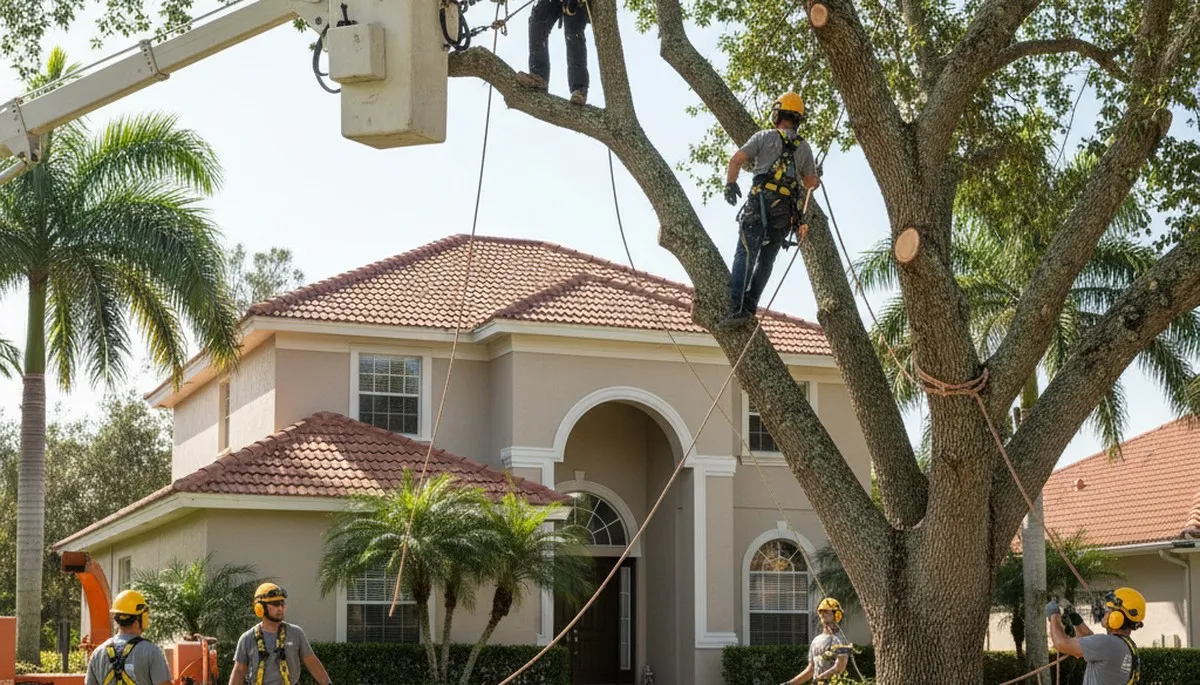
Miramar expanded quickly during the 1990s and 2000s, with planned communities landscaped around fast-growing native and non-native trees that are now reaching maturity. That growth is still visible today in crowded canopy lines, aging root systems, and declining palms that affect how tree care has to be done.
Root Pressure Around Canals and Drainage Systems
In canal-adjacent neighborhoods such as Sunset Lakes and Monarch Lakes, many mature ficus, mahogany, and oak trees have roots that have spread toward water-management infrastructure over time. The result can be cracked sidewalks, stressed pipes, and HOA compliance concerns.
Local professionals address these issues with selective root pruning, thoughtful canopy reduction, and, when needed, complete removal followed by suitable replanting to reduce future drainage and access problems.
Fungus, Moisture, and Declining Canopy Health
Miramar's warm humidity and frequent afternoon rain encourage healthy-looking growth, but they also create conditions where fungal problems spread quickly through the canopy. Ganoderma root rot in palms and sooty mold on ornamentals can weaken trees and speed up decline across planting beds.
Professionals respond with targeted tree disease treatment applications, canopy thinning to improve airflow, and tree fertilizing plans suited to Miramar's mix of clay-heavy and sandy soils.
Aging Palms and Structural Risk
Years of salt exposure and uneven maintenance have left many Miramar palms with frond buildup, nutrient shortages, and weak structural performance that can create hazardous overhangs above driveways and pool areas.
Trusted crews maintain these palms through scheduled frond removal, targeted micronutrient treatments, and lightning protection for tall isolated trees, helping improve both safety and long-term health.
Hurricane-Season Winds and Storm Damage
Atlantic hurricane season brings tropical winds and fast-moving squall lines that can break limbs, uproot trees, and damage canopies across Miramar's closely planted neighborhoods.
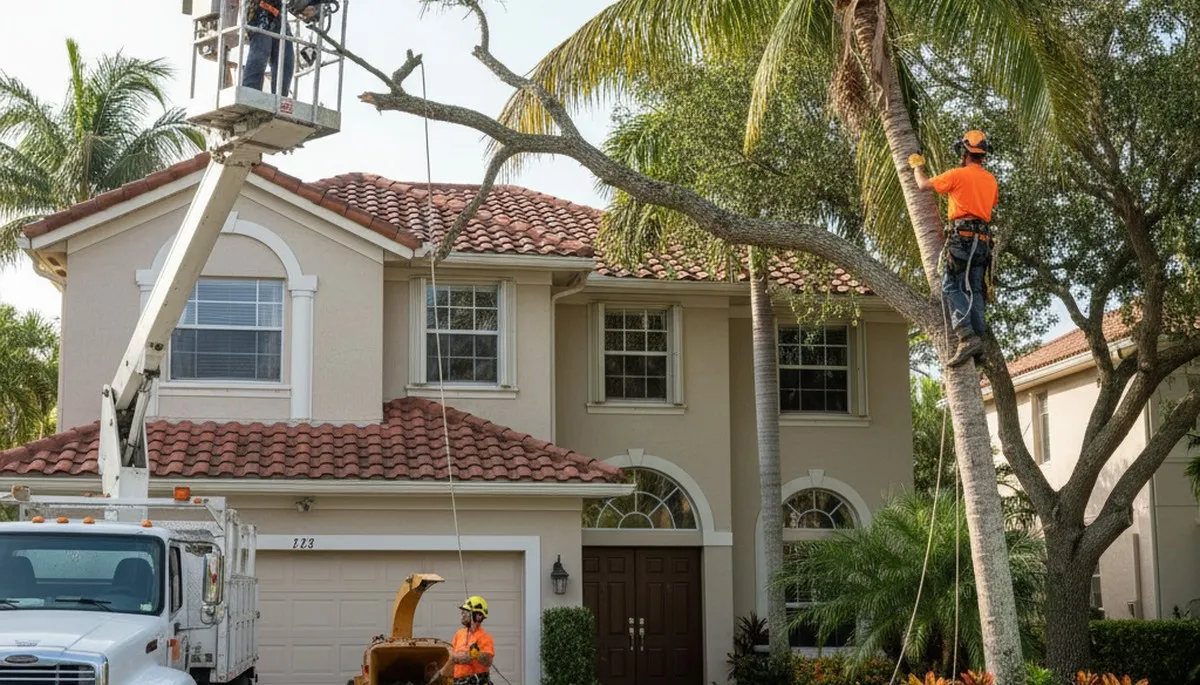
Experienced crews use pre-season structural pruning, weight reduction, crown thinning, and cable bracing on co-dominant stems to improve stability before severe weather arrives. Properties near the Pembroke Road corridor and along Flamingo Road benefit especially from this kind of advance preparation. Homeowners in nearby communities can also reference emergency tree services in Pembroke Pines, FL for similar storm response planning across the region.
Tight Access and HOA Rules
Miramar's planned developments often include narrow side yards and zero-lot-line layouts, which makes equipment access and debris removal more complicated without disturbing neighboring properties or running afoul of HOA rules.
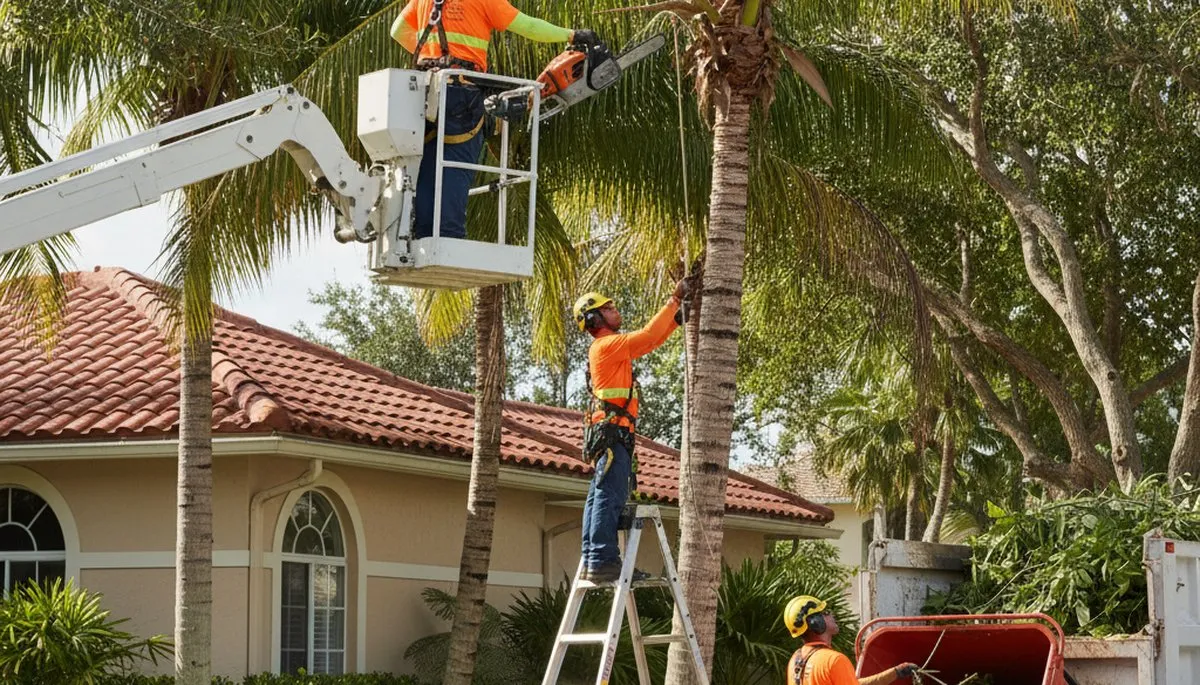
Local pros rely on compact aerial lifts and hand-carry removal methods to stay within property boundaries and keep debris contained, delivering tree services that work within Miramar's tightly managed communities. Those dealing with similar access issues in nearby areas can review tree removal contractors in Hollywood, FL for regional examples of how crews handle compact urban lots.

Begin your tree service project today

Tree Services in Miramar, FL: Seasonal Care That Fits the Area
From regular maintenance to emergency response after a storm, here is how local pros keep Miramar properties healthy, organized, and prepared for changing weather:
Routine Tree Trimming and Pruning in Miramar, FL
- Canopy thinning for airflow and disease prevention — Reducing dense growth on mature oaks and mahogany trees in Riviera Isles and Silver Lakes helps limit fungal buildup during Miramar's wet season.
- Palm frond and dead wood removal — Regular clearing of hanging fronds and deadwood from palms along Miramar Parkway lowers risk over driveways, walkways, and parked cars.
- Structural tree pruning for wind resistance — Pre-season crown reduction on large shade trees near the Miramar Town Center corridor helps reduce wind stress before Atlantic storm systems move in.
- HOA compliance trimming — Keeping canopy height and spread within HOA limits in Monarch Lakes helps maintain compliance while protecting tree health.
- Ornamental shrub and hedge shaping — Precise trimming of ornamental plantings along frontages near Red Road and Pembroke Road supports curb appeal and prevents growth from spilling onto sidewalks.
Plan trimming before wet season begins so your Miramar canopy is better protected from humidity-related disease and storm damage.
Tree Removal Services in Miramar, FL
- Hazardous tree removal near structures — Leaning or root-damaged trees near homes in Sunset Lakes and canal-front lots often need sectional removal to reduce the chance of property damage.
- Storm damage tree clearing — After hurricanes or strong wind events, debris removal from split or uprooted trees helps restore safe access to driveways, streets, and backyards.
- Dead tree removal — Standing dead trees in older subdivisions near Flamingo Road can become falling hazards and should be removed before storm season intensifies.
- Invasive species removal — Australian pines and Brazilian pepper trees near retention ponds and undeveloped parcels often need full removal to protect native vegetation.
- Commercial property tree clearing — Overgrown trees near business parks and retail corridors along Hiatus Road can be removed with minimal disruption to parking and daily operations.
Removing damaged or dead trees quickly helps reduce structural risk and keep Miramar properties aligned with local safety and landscaping rules.
Stump Grinding and Cleanup in Miramar, FL
- Residential stump grinding in HOA communities — After tree removal in Silver Lakes and Riviera Isles, stump grinding below grade removes trip hazards and clears space for sod or replanting.
- Stump removal near irrigation and drainage lines — Canal-side lots in Miramar often have stumps close to buried irrigation systems, so crews must control grinding depth carefully to avoid damage.
- Multi-stump clearing for landscape renovation — Properties being redesigned near the Miramar Town Center can benefit from full stump-field clearing before new planting or hardscape work begins.
- Root flare grinding and debris hauling — Surface roots left behind after tree removal along Miramar Parkway are ground down and hauled away to restore clean turf and reduce future trip hazards.
- Post-grinding backfill and site cleanup — Once grinding is complete, crews refill the area with appropriate material and clean the site so the property is ready for replanting or immediate use.
Thorough stump and root removal reclaims usable lawn space, supports new landscape plans, and removes decaying wood that can attract pests in Miramar's warm, humid weather.
Emergency Tree Services in Miramar, FL
- 24/7 fallen tree response — When tropical storms or fast-moving squall lines bring trees down across driveways, rooftops, or roadways in Miramar, emergency tree services crews move fast to restore access and limit additional damage.
- Storm-damaged limb removal — Hanging or partly attached limbs left in the canopy after high winds remain a serious hazard until crews remove them.
- Uprooted tree stabilization and removal — Saturated soils in canal-adjacent neighborhoods such as Monarch Lakes can lead to sudden uprooting that requires immediate response.
- Post-hurricane debris clearance — After named storms, coordinated crews clear blocked routes and remove fallen canopy debris from Miramar properties in a prioritized, organized sequence.
- Emergency root and structure assessment — After major wind events, professionals inspect remaining trees for hidden structural weakness and identify trees that may need removal before the next storm arrives.
Fast emergency response across Miramar helps address storm-related tree hazards before they turn into major structural damage or long access disruptions for residents and businesses.